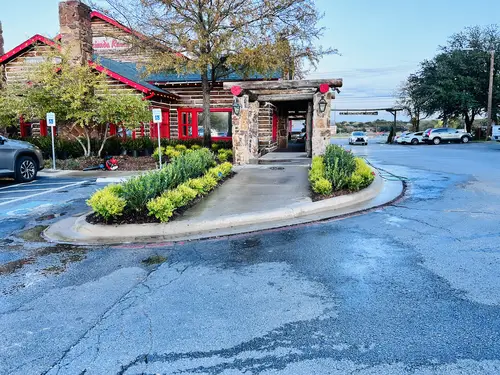
Your commercial property's landscape is working for you every single day — whether you're actively maintaining it or not. The question is: is it working in your favor or against you?
A well-maintained commercial landscape communicates professionalism, stability, and attention to detail before a customer ever steps through your door. A neglected one sends the opposite message: if they don't care about the outside, what's the inside like? For Dallas businesses competing in a crowded market, that first impression can be the difference between a new client and a lost opportunity.
The Business Case for Landscape Maintenance
Customer Perception & Trust
Research from the International Society of Arboriculture found that 86% of consumers are more likely to do business with a company that has a well-maintained landscape. That's not just about aesthetics — it's about trust. A clean, green property signals that the business is stable, organized, and cares about quality. That perception extends to everything else a customer experiences with your company.
In Dallas, where many businesses are located in strip malls, office parks, and industrial corridors, your landscape is often the only "branding" visible from the road. If your competitor down the street has a manicured lawn and yours looks overgrown, you're losing points before the conversation even starts.
Property Value & Lease Attractiveness
For property owners and managers, landscape maintenance directly impacts asset value. Commercial properties with professional landscape care command higher rents, experience lower vacancy rates, and retain tenants longer. The ROI is straightforward: a $500/month landscape maintenance contract on a 10,000 sq ft office park is a small line item compared to the revenue impact of a vacant suite or a tenant negotiating a rent reduction because "the place looks run down."
Employee Morale & Productivity
This one gets overlooked more than it should. Employees spend 8+ hours a day at work. A pleasant outdoor environment — clean walkways, green lawns, well-maintained plantings — contributes to morale and reduces stress. It also matters for the employees who work outside: grounds staff, delivery drivers, and security personnel all interact with the landscape daily.
Safety & Liability
Neglected landscapes create real safety hazards:
- Overgrown vegetation obscures sight lines at parking lot entrances and creates hiding spots that compromise security
- Tall grass harbors ticks, scorpions, and other pests that can enter buildings
- Untrimmed trees drop limbs on vehicles and pedestrians during wind events
- Standing water in unmaintained areas breeds mosquitoes and creates slip hazards
- Uneven hardscapes from root pressure or settling create trip hazards
A documented maintenance program is also your best defense against liability claims. If someone trips on an overgrown walkway, "we had a contract for weekly maintenance" is a very different position than "we didn't have anyone looking at it."
What Commercial Landscape Maintenance Actually Includes
Commercial landscape maintenance is more than mowing. A comprehensive program typically includes:
Weekly Services (Growing Season)
- Mowing: All turf areas cut to specified height with clean edges
- Edging: All lawn-to-hardscape transitions edged for a sharp, professional finish
- Trimming: Shrubs, hedges, and foundation plantings kept at specified shapes
- Debris removal: Leaves, twigs, and clippings collected and disposed of
- Walkway & parking lot cleanup: Blown or swept clear of debris
Monthly Services
- Irrigation inspection: Check all zones for breaks, misalignment, and coverage issues
- Weed control: Spot treatment in turf and beds
- Pruning: Reactive pruning of trees and shrubs as needed
- Hardscape inspection: Check for cracking, settling, or root damage
Seasonal Services
- Spring: Fertilization, pre-emergent application, bed cleanup, mulch refresh
- Summer: Pest monitoring, irrigation adjustments, deep watering programs
- Fall: Fall fertilization, aeration, leaf management, winter prep
- Winter: Storm damage assessment, dormant pruning, planning for spring
Common Mistakes Dallas Businesses Make
"We'll Just Mow It"
Mowing is necessary but not sufficient. A lawn that's mowed but not fertilized, weeded, or irrigated properly will look thin and patchy within a season. Comprehensive maintenance addresses all the factors that keep turf healthy, not just the visible top layer.
Waiting Until It's Ugly
By the time a landscape looks "bad enough" to call someone, it's already been neglected for weeks or months. Recovery from neglect costs 3–5x more than consistent maintenance. A lawn that's gone dormant from drought stress takes an entire season to recover. A bed full of weeds takes hours to clean out versus minutes to prevent.
No Documentation
If you're a property manager with multiple sites, you need a documented maintenance program with photos, service logs, and issue reports. This protects you legally, helps with budget planning, and makes it easy to identify recurring problems before they become expensive ones.
Ignoring Irrigation
In Dallas, your irrigation system is the backbone of your landscape. A single broken sprinkler head can waste 500+ gallons per day. A misaligned rotor can spray water on pavement for months. Regular irrigation inspection should be part of every commercial maintenance contract.
Cost Comparison: Maintenance vs. Neglect
| Scenario | Annual Cost |
|---|---|
| Consistent weekly maintenance (10,000 sq ft) | $6,000–$12,000 |
| One-time recovery after 6 months neglect | $8,000–$25,000 |
| Full re-sod after lawn death | $15,000–$40,000 |
| Irrigation system repair (neglected) | $3,000–$15,000 |
| Liability claim from landscape hazard | $10,000–$100,000+ |
Need a Commercial Landscape Partner in Dallas?
We manage recurring care plans for offices, retail centers, HOAs, and industrial properties across the Dallas metro. Custom programs built around your property's specific needs and budget.
Get a Free EstimateBuilding a Long-Term Landscape Strategy
The best commercial landscape programs aren't just about keeping things clean — they're about progressive improvement. Here's what a strategic approach looks like:
Year 1: Stabilize
- Establish consistent weekly maintenance
- Fix irrigation issues and establish proper watering schedule
- Address any immediate safety hazards
- Document baseline condition with photos
Year 2: Improve
- Implement seasonal fertilization and soil amendment program
- Replace dead or failing plants with appropriate selections
- Add or refresh mulch in all beds
- Address drainage issues before they become structural problems
Year 3+: Enhance
- Introduce landscape lighting for evening presence
- Add seasonal color rotations for visual interest
- Implement water-wise practices to reduce utility costs
- Evaluate mature trees for health and structural integrity
This phased approach keeps annual budgets predictable while delivering progressive improvement. It's the difference between a landscape that's "adequate" and one that's a genuine asset to your business.
The Bottom Line
Commercial landscape maintenance isn't an expense — it's an investment in your brand, your property value, your employee experience, and your legal protection. The businesses that treat their landscape as a core part of their operations (rather than an afterthought) consistently outperform those that don't, both in customer perception and in bottom-line results.
If you're a property owner, manager, or business leader in the Dallas area who's tired of chasing lawn care vendors or dealing with a landscape that's always one step behind, it's time for a partner who treats your property like their own.