
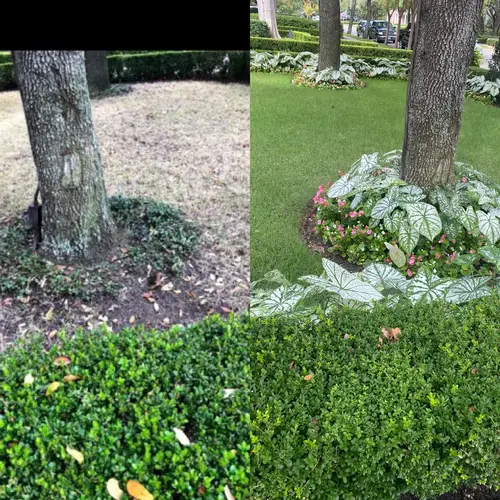
Dallas lawns operate on a warm-season grass cycle that is fundamentally different from what you'd see in the northern United States. Understanding this rhythm is the single most important factor in keeping your yard healthy, green, and weed-free throughout the year.
At Dallas Garden Services LLC, we've maintained over 850 properties across North Texas. Here's the seasonal calendar we follow for our clients — and the one we recommend for any homeowner who wants a professional-grade lawn without hiring a full service crew.
January: Dormancy & Planning
Your warm-season grass (Bermuda, Zoysia, or St. Augustine) is dormant right now. The ground is cold, growth has stopped, and the lawn looks brown or tan. This is normal and not a cause for alarm.
- Inspect for winter damage: Walk your property and note any bare patches, pest damage, or areas where the grass didn't recover well last fall.
- Plan your spring budget: Decide whether you'll overseed, re-sod problem areas, or invest in drainage corrections before the growing season hits.
- Service equipment: Sharpen mower blades, check oil levels, and make sure your edger is ready for the first cut of the season.
- Order soil test kits: If you haven't tested your soil in the past two years, January is the ideal time to send samples in so results arrive before spring fertilization.
February: Early Spring Prep
Soil temperatures in Dallas begin climbing above 55°F in late February. This is the signal that warm-season grasses are waking up.
- First mow of the season: Once you see 1–2 inches of new green growth, give the lawn a light cut at a higher setting (3.5–4 inches). Don't scalp dormant grass — it removes the energy reserves the plant needs to grow.
- Remove winter debris: Clear leaves, twigs, and any accumulated organic matter from beds and walkways.
- Pre-emergent application (optional): For Bermuda lawns, a pre-emergent herbicide in mid-February can suppress crabgrass and other summer weeds before they germinate.
March: The Wake-Up Call
This is when Dallas lawns transform. Growth accelerates rapidly, and the window for spring maintenance opens wide.
- First fertilization: Apply a balanced N-P-K fertilizer (e.g., 15-0-15 or 16-4-8) once soil temps consistently hit 65°F. This kick-starts root development.
- Aerate if needed: If your soil is compacted (common in Dallas clay), core aeration in March helps oxygen and water penetrate to the root zone.
- Edge and detail: Clean up all edges around walkways, driveways, and beds. A sharp edge makes the entire property look professionally maintained.
- Start weekly mowing: As growth speeds up, you'll likely need to mow every 5–7 days through April and May.
April: Peak Growth Begins
Dallas enters its most aggressive growing period. Warm-season grasses can grow 1–2 inches per week under ideal conditions.
- Mow frequently: Weekly or even twice-weekly mowing keeps the lawn dense and prevents scalping.
- Water deeply but less often: Aim for 1 inch of water per week (rainfall + irrigation). Deep, infrequent watering encourages deep roots.
- Weed control: Spot-treat any weeds that emerge. This is the last good window before summer heat makes herbicide application less effective.
- Monitor for chinch bugs: These pests attack Bermuda and St. Augustine in early summer. Look for yellowing patches that worsen in full sun.
May – August: Summer Maintenance
These are the hardest months on your lawn. Temperatures regularly exceed 95°F, humidity fluctuates, and drought stress is a constant threat.
- Keep mowing height higher: Raise your mower to 3–4 inches. Longer blades shade the soil, reduce evaporation, and protect the crown from heat stress.
- Water in the early morning: Between 4 AM and 8 AM minimizes evaporation loss and reduces fungal risk. Avoid evening watering.
- Don't fertilize during extreme heat: Fertilizing when temps are above 90°F can burn the grass. Wait for a cooler stretch or hold until September.
- Mulch beds: A fresh 2–3 inch layer of mulch around trees and shrubs retains moisture and suppresses weeds.
- Watch for brown patch: This fungal disease thrives in hot, humid conditions. Improve air circulation and avoid overwatering.
Pro tip: If your lawn looks stressed in July, resist the urge to water more. In most cases, the problem is shallow roots from frequent light watering. Switch to deep, infrequent irrigation and the lawn will recover within two weeks.
September: The Most Important Month
Here's what most Dallas homeowners don't know: September is the single most critical month for warm-season grass health. As days shorten and nights cool, your grass is preparing to go dormant. What you do now determines how well it survives winter and how fast it greens up in spring.
- Final fertilization of the year: Apply a fall fertilizer with higher potassium (e.g., 10-0-20) to strengthen cell walls and improve cold tolerance.
- Aerate again if needed: A second aeration in September helps the lawn store energy for winter dormancy.
- Overseed thin areas: If you have bare patches, this is the best time to overseed with a compatible warm-season variety or a temporary cool-season cover crop (rye) for winter color.
- Reduce mowing frequency: As growth slows, you can stretch to every 7–10 days.
October – November: Wind-Down
Growth slows significantly. The focus shifts to protecting the lawn through winter.
- Last mow before dormancy: Cut at a slightly lower height (2.5–3 inches) to reduce the surface area exposed to winter winds and frost.
- Remove fallen leaves: Don't let thick leaf layers smother the grass. Rake or blow them off before the ground freezes.
- Stop fertilizing: No more nitrogen applications after mid-November. You'll stimulate tender growth that will be killed by the first hard freeze.
- Winterize irrigation: Shut off outdoor spigots, drain hoses, and if you have an in-ground system, have it blown out to prevent pipe damage.
December: Rest & Recovery
Your lawn is fully dormant. This is a low-maintenance month, but there are still a few things worth doing.
- Walk the property: Note any problem areas — bare spots, drainage issues, pest damage — so you can address them in January planning.
- Order supplies for spring: Fertilizer, pre-emergent, and mulch often go on sale in late fall/early winter.
- Plan landscape upgrades: Winter is the best time to design new beds, plan tree plantings, or scope out drainage projects without fighting active growth.
Want a Professional to Handle All of This?
Dallas Garden Services LLC manages complete seasonal care programs for residential and commercial properties across Dallas. One call covers mowing, fertilization, edging, cleanup, and more.
Get a Free EstimateKey Takeaways
- Warm-season grasses in Dallas are dormant from December through February — don't panic about the brown color.
- March and September are your two most important maintenance windows.
- Summer is about stress management: higher mowing, deep watering, and no fertilizing in extreme heat.
- Fall fertilization with potassium is the single highest-impact action you can take for winter survival.
- Consistency beats intensity. A simple weekly routine outperforms sporadic heroic efforts.