
Mulch is one of the most cost-effective improvements you can make to any North Texas landscape. A proper mulch layer reduces soil evaporation by up to 70%, moderates root zone temperatures, suppresses weeds, and dramatically improves the visual appeal of planting beds. Yet many Dallas homeowners apply the wrong type, at the wrong depth, or at the wrong time — negating the benefits and sometimes causing harm.
Types of Mulch Available in North Texas
Hardwood Mulch (Most Popular)
Shredded or ground hardwood from local tree services. Available in natural brown, dyed red, black, or gold. The most versatile option for residential landscapes.
- Pros: Inexpensive ($35–55/cubic yard), widely available, breaks down into soil amendment over 2–3 years, good water retention
- Cons: Needs replenishing every 1–2 years, can float in heavy rain, dyed versions may stain light-colored surfaces
- Best for: General use around trees, shrubs, and flower beds
Cedar Mulch
Milled from cedar shavings, typically in red or natural tones. More uniform in texture than hardwood mulch and resists decomposition longer.
- Pros: Lasts 3–4 years before needing replacement, natural insect deterrent properties, consistent appearance, doesn't break down as quickly
- Cons: More expensive ($60–90/cubic yard), lighter weight (blows away if not anchored), can be acidic (minor pH effect)
- Best for: Visible landscape areas where appearance matters, around evergreen plantings
Bark Mulch (Pine or Hardwood)
Larger chunks of bark rather than fine grind. Provides better aeration and drainage while still offering moisture retention.
- Pros: Excellent drainage, long-lasting (3–5 years), natural look, good for slopes (less likely to wash away)
- Cons: Less effective at weed suppression due to gaps, can be harder to spread evenly
- Best for: Slopes, around trees with aggressive root systems, naturalistic designs
Rubber Mulch
Recycled rubber from tires, available in black, red, blue, and green. A permanent solution that never decomposes.
- Pros: Lasts 10+ years, zero maintenance, won't wash away or blow away, consistent color
- Cons: Expensive upfront ($80–120/cubic yard), doesn't improve soil, can leach chemicals in extreme heat, not biodegradable
- Best for: Play areas, high-traffic zones, commercial landscapes, areas where organic mulch keeps washing away
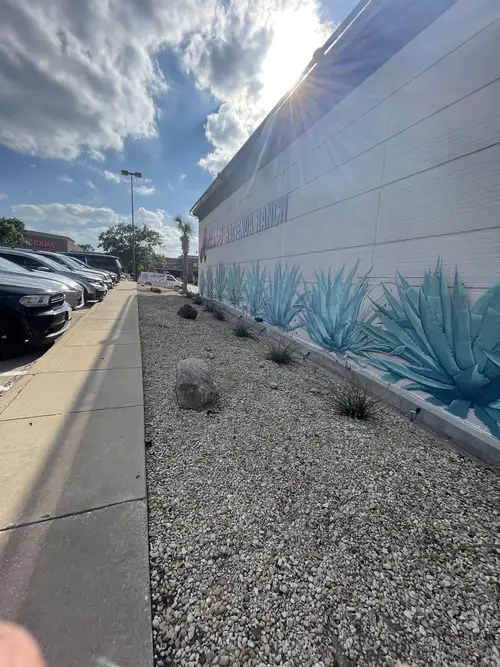
Gravel / Decorative Stone
Washed gravel, decomposed granite, or decorative river rock. The ultimate low-maintenance option for xeriscaped designs.
- Pros: Permanent, no replacement needed, ideal for drought-tolerant plantings, clean modern look
- Cons: Absorbs and radiates heat (can stress shallow roots in extreme heat), harder to add soil amendments later, weeds still grow between stones without fabric
- Best for: Xeriscape designs, around succulents and cacti, modern architectural landscapes
Proper Application: Depth & Technique
The most common mistake is applying mulch too thickly. Here are the rules:
- Correct depth: 2–3 inches for most applications. Never exceed 4 inches.
- Keep it off the trunk: Maintain a 2–3 inch gap between mulch and any tree trunk or shrub stem. "Volcano mulching" (piling against the trunk) causes rot and kills trees.
- Extend to the drip line: For trees, mulch should extend out to where the outer branches end (the drip line), not just a small circle at the base.
- Use landscape fabric underneath? Generally no. Fabric prevents water and nutrients from reaching roots and creates a barrier that harms soil biology. Only use it under gravel on slopes to prevent erosion.
- Rake smooth: After spreading, rake the surface to create a uniform, slightly sloped layer that directs water toward roots.
When to Apply or Refresh Mulch in Dallas
- Best time: Late winter to early spring (February–March) — as soil warms and growth begins, fresh mulch protects new growth and retains spring moisture.
- Second option: Fall (October–November) — insulates roots during occasional cold snaps and looks fresh for holiday season.
- Avoid: Peak summer heat — applying mulch to hot, dry soil traps heat at the root zone initially. Water thoroughly before and after application if you must do it in summer.
How Much Mulch Do You Need?
Quick calculation: Area (sq ft) × Depth (inches) ÷ 172.8 = Cubic yards needed.
Example: A 200 sq ft bed with 3 inches of mulch = 200 × 3 ÷ 172.8 = 3.5 cubic yards. Most pickup trucks carry about 1 cubic yard; a standard dump truck delivers 10–12 cubic yards.
Mulch & Water Conservation
In Dallas's climate, a proper 3-inch mulch layer can reduce irrigation needs by 20–40% in landscape beds. The mulch works by:
- Blocking direct sun from the soil surface (reducing evaporation)
- Insulating roots from temperature extremes (soil under mulch stays 10–15°F cooler in summer)
- Preventing soil crusting that blocks water infiltration
- Reducing weed competition for water and nutrients
Professional Mulch Installation in Dallas
We deliver, spread, and edge mulch for residential and commercial properties. Choose from hardwood, cedar, bark, or rubber — we handle cleanup too.
Request a Mulch Quote