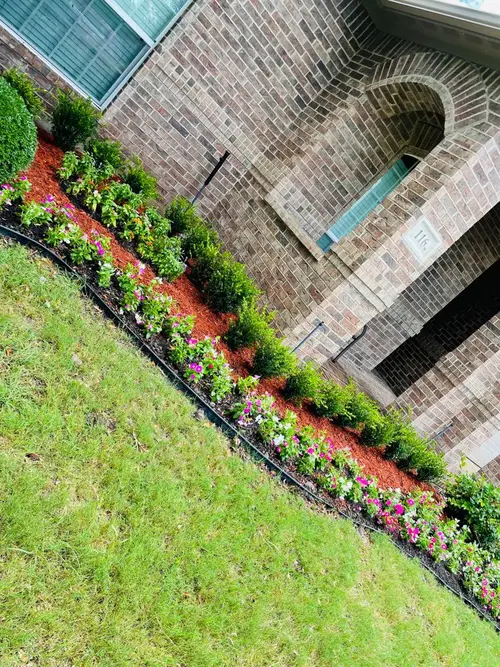
One of the most common questions we hear from Dallas homeowners: "How do I keep color in my yard all year?" The answer is layering — combining plants that bloom in different seasons so there's always something in flower. In North Texas, you actually have a advantage: our growing season is long enough (October through May for cool-season plants, March through November for warm-season) that with proper planning, continuous bloom is achievable.
Spring (March–May): The Explosion
Spring is peak bloom season in Dallas. Plan your spring display around these workhorses:
- Turk's Cap Lily (Lilium superbum): Native, 3–4 ft, red trumpet flowers in April–May. Thrives in part shade and moist soil. The single best spring perennial for North Texas.
- Daylilies (Hemerocallis): Choose reblooming varieties ('Stella de Oro', 'Happy Returns') for 6+ months of bloom. Full sun to part shade, drought-tolerant once established.
- Canna Lilies: Bold tropical foliage and summer-into-fall blooms. Plant in April after frost risk passes. 'Tropical Confetti' and 'Pretoria' perform well in Dallas heat.
- Begonias (tuberous & wax): The king of spring color in containers and beds. Wax begonias handle Dallas heat better than most annuals. Plant in March–April.
- Petunias & Calibrachoa: Classic spring annuals. Calibrachoa ("million bells") outlasts petunias in heat. Both need morning sun and afternoon shade in July.
- Salvia (Salvia farinacea): Blue salvia is the backbone of Texas summer color. Blooms April through frost. Drought-tolerant, bee-friendly, handles heat beautifully.
Summer (June–August): Heat-Proof Color
Summer is when most plants quit. These keep going:
- Black-Eyed Susan (Rudbeckia hirta): Native, blooms June–October, deadhead for continuous bloom. Full sun, drought-tolerant, attracts butterflies.
- Zinnias: The best summer annual for Dallas. 'Benary's Giant' and 'Profusion' series handle 100°F heat. Succession plant every 4 weeks for non-stop bloom.
- Marigolds: Cheap, tough, and bloom all summer. French marigolds ('Signature' series) for beds; African marigolds for containers.
- Portulaca (Moss Rose): Succulent ground cover that thrives in heat and drought. Flowers open in full sun, close in shade/rain. Perfect for slopes and poor soil.
- Crape Myrtle: Not a flower bed plant, but the #1 summer-blooming tree. Blooms June–September. Choose multi-stem varieties over standard forms for a more natural look.
- Penstemon (Penstemon barbatus): Texas native, red/orange tubular flowers, blooms spring through fall. Attracts hummingbirds. Drought-tolerant once established.
Fall (September–November): The Second Spring
Fall is Dallas's secret growing season. Cooler temperatures and adequate rain make it ideal for planting:
- Mums (Chrysanthemums): The classic fall color. Plant in September–October for peak bloom in November. Treat as annuals in Dallas (they rarely survive our winters).
- Salvia (continued): Blue salvia often re-blooms in fall after a light trim in August.
- Coreopsis: Native species ('Tickseed') bloom September–November. Full sun, drought-tolerant, great for naturalized areas.
- Coltsfoot (Pulmonaria): Early fall to winter bloomer in part shade. Purple-pink flowers followed by spotted foliage.
- Winter Aconite & Snowdrops: Plant bulbs in October for the earliest spring color (February–March). Rarely seen in Dallas yards but beautiful in naturalized areas.
Winter (December–February): Don't Give Up
Yes, you can have winter color in Dallas. It's limited but real:
- Camellia: The queen of winter bloom. Large rose-like flowers from December through March. Needs acidic soil and afternoon shade. 'Yuletide' and 'Captain Charles Smith' are reliable.
- Winter Jasmine (Jasminum nudiflorum): Bright yellow flowers on bare stems in January–February. Fast-growing vine for walls and fences.
- Christmas Cactus: In containers, blooms December–January. Place in a bright window or covered patio.
- Canterbury Bells (Campanula): Cool-season annual that blooms in winter in North Texas. Plant in November for January–February color.
- Daffodils & Tulips: Plant bulbs in October–November. Daffodils are reliable; tulips are hit-or-miss in Dallas (often only last 1–2 years). Plant them anyway — the first year is always worth it.
The Layering Strategy: A Sample Year-Round Plan
| Layer | Spring | Summer | Fall | Winter |
|---|---|---|---|---|
| Background (trees/shrubs) | Turk's Cap, Azalea | Crape Myrtle | — | Camellia |
| Mid (perennials) | Daylily, Salvia | Black-Eyed Susan, Penstemon | Coreopsis | — |
| Front (annuals) | Begonia, Petunia | Zinnia, Marigold | Mums | Canterbury Bells |
| Ground cover | Creeping Phlox | Portulaca | — | Winter Jasmine (spilling) |
Planting Tips for Dallas Flower Beds
- Amend clay soil: Mix 30% compost into native soil before planting. Flowers in pure clay struggle with drainage.
- Mulch 2–3 inches deep: Retains moisture, suppresses weeds, and keeps roots cool in summer.
- Water deeply 2–3×/week in summer: Flower beds need more water than lawns. Drip irrigation is ideal.
- Deadhead regularly: Removing spent blooms extends flowering by weeks. Especially important for zinnias, salvia, and daylilies.
- Feed monthly: A balanced slow-release fertilizer (10-10-10) or monthly liquid feed keeps blooming vigorous.
- Group in drifts: Plant 3, 5, or 7 of the same variety together rather than single specimens. Mass plantings have greater visual impact.
Year-Round Color Installation
We design and install seasonal color programs that keep your landscape blooming from February through November. Spring, summer, and fall rotations included in our maintenance plans.
Get a Color Design Quote