
After a mild Texas winter, your yard is ready for a reset. Spring cleanup isn't just about making things look nice — it's about removing the debris that harbors pests and diseases, giving your soil a chance to breathe, and setting the stage for the aggressive growing season ahead.
In Dallas, the spring cleanup window typically opens in late February and runs through March. Here's our professional checklist, organized by priority, so you can tackle your property systematically whether you're doing it yourself or hiring a crew.
Phase 1: Debris Removal (The Big Stuff First)
Start with the most visible and impactful work. This is what makes the biggest difference in how your property looks.
Leaf & Twig Removal
- Rake or blow all accumulated leaves from lawns, walkways, driveways, and beds. In Dallas, live oak trees drop continuously, so there's usually a significant layer by spring.
- Clear gutters and downspouts of leaves and debris. Clogged gutters overflow during spring storms and create erosion patterns along foundations.
- Remove any large branches that fell during winter storms. Check under shrubs and along fence lines where debris collects unnoticed.
- Clear flower beds of dead annuals, spent perennials, and accumulated organic matter. Cut back any woody perennials that died back over winter.
Trash & Debris Hauling
- Collect yard waste into bags or a chipper for mulching. Many Dallas-area cities offer curbside yard waste pickup — check your local schedule.
- Remove old pots, broken hardscape pieces, and any miscellaneous items that accumulated over the season.
- Chip or shred larger branches for use as mulch in beds. This is free, locally-sourced mulch that's perfect for landscape beds.
Phase 2: Lawn Recovery
Once the big debris is gone, focus on getting your lawn ready for the growing season.
First Mow of the Season
- Wait until you see 1–2 inches of new green growth before making the first cut. Mowing dormant grass removes the energy reserves it needs to grow.
- Set your mower at a higher setting (3.5–4 inches) for the first few cuts. You're trimming the tips, not scalping the lawn.
- Sharpen your blades first. A dull blade tears warm-season grass instead of cutting it cleanly, creating brown tips that invite disease.
Aeration & Dethatching
- Core aerate if your soil is compacted. Dallas clay soils compact easily, especially in high-traffic areas. Look for water that pools on the lawn surface after rain — that's a sign of compaction.
- Dethatch if thatch exceeds ½ inch. Pull up a core sample: if the layer of dead organic matter between the green grass and the soil is thicker than half an inch, you need to dethatch.
- Best timing: Early spring (March) is ideal for both aeration and dethatching in North Texas.
Weed Control
- Apply pre-emergent herbicide before summer weeds germinate. For Bermuda lawns, this targets crabgrass and other annual weeds. Timing: when soil temps hit 55°F consistently (usually mid-February to early March in Dallas).
- Spot-treat existing weeds with a post-emergent herbicide. Be careful around newly emerging grass — wait until the lawn is actively growing before applying.
- Hand-pull any weeds in beds and along hardscape edges where herbicide application isn't practical.
Phase 3: Bed & Plant Care
This is where your landscape goes from "clean" to "polished."
Mulch Refresh
- Top up mulch in all beds to a depth of 2–3 inches. Winter rain and decomposition thin out existing mulch layers.
- Pull mulch away from plant stems by at least 2 inches. "Volcano mulching" (piling mulch against trunks and stems) traps moisture and causes rot.
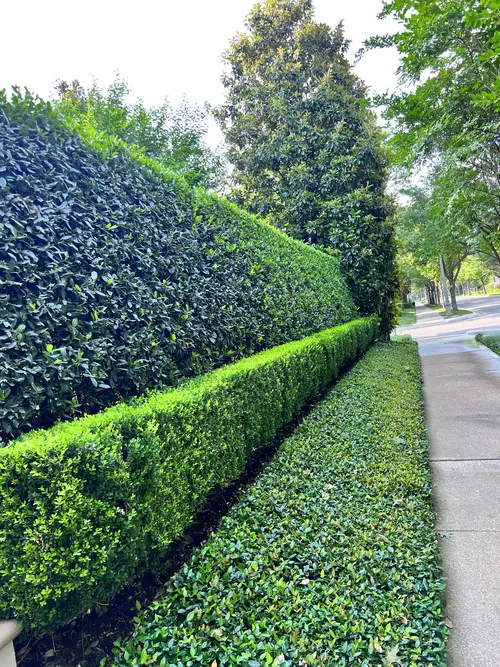
- Rake mulch edges clean against lawn and hardscape borders for a sharp, professional look.
Pruning & Shaping
- Prune dormant deciduous trees before new growth emerges. Remove dead, damaged, or crossing branches. Shape for structure and clearance.
- Shear evergreen shrubs once new growth begins. Avoid heavy pruning in early spring — wait until the plant has produced at least 2–3 inches of new growth so you can see the shape.
- Cut back ornamental grasses that died back over winter. Most warm-season ornamental grasses should be cut to 4–6 inches above the ground in late February or early March.
- Remove any winter-killed plants and replace with new selections if desired.
Planting New Selections
- Spring is prime planting season in Dallas. Soil is warming, rainfall is increasing, and plants have the entire growing season to establish.
- Focus on structural plants first: trees, large shrubs, and foundation plantings. These take the longest to establish and benefit from the full season.
- Add color with annuals after the last frost date (typically mid-March in Dallas). Petunias, marigolds, zinnias, and warm-season vegetables all go in now.
Phase 4: Hardscape & Detail Work
The finishing touches that make a property look professionally maintained.
Edging
- Edge all lawn-to-bed transitions with an edger or sharp spade. A clean edge is the single most impactful detail in landscape maintenance.
- Edge walkways, driveways, and patios to remove grass encroachment and create crisp lines.
- Consider installing permanent edging (metal, stone, or plastic) along high-visibility borders if you want to reduce maintenance frequency.
Irrigation System Check
- Turn on your irrigation system and walk every zone. Look for broken heads, misaligned spray patterns, leaks, and areas of poor coverage.
- Replace any broken sprinkler heads before the summer season hits. A single broken head can waste hundreds of gallons per day.
- Adjust spray patterns so water isn't hitting walls, fences, or pavement. Every drop should land on soil or plants.
- Check your timer settings and program for early morning watering (4–8 AM) as temperatures rise.
Fencing & Structures
- Inspect fences for loose posts, rot, or damage from winter storms. Tighten hardware and replace any compromised sections.
- Clean outdoor furniture, grills, and other structures that were stored or exposed over winter.
- Pressure wash patios, walkways, and driveways to remove winter grime, algae, and mineral deposits.
Want a Professional Spring Cleanup?
Our crews handle complete spring cleanups: debris removal, bed refresh, edging, mulch top-up, and lawn prep. One visit transforms your property from winter-dormant to spring-ready.
Get a Free EstimateSpring Cleanup Timeline for Dallas
| Week | Focus |
|---|---|
| Late Feb | Debris removal, gutter cleaning, tree pruning |
| Early March | First mow, aeration, pre-emergent application |
| Mid March | Mulch refresh, bed cleanup, irrigation check |
| Late March | Edging, planting annuals, final detail work |
| April | Transition to weekly maintenance schedule |
Common Mistakes to Avoid
- Mowing too early: Cutting dormant grass in February removes the plant's energy reserves and delays green-up by 2–3 weeks.
- Applying pre-emergent too late: Once summer weeds have already germinated, pre-emergent won't help. You'll need a post-emergent instead, which is less effective.
- Skipping the irrigation check: Waiting until July to discover a broken sprinkler head means you've been wasting water for two months.
- Not edging: You can do everything else perfectly, but if the edges are ragged, the whole property looks neglected. Edging is non-negotiable.
- Over-mulching: More than 3 inches of mulch suffocates roots and creates a habitat for pests. Two to three inches is the sweet spot.